
Call us now :08045815539
 Send Inquiry
 Send Inquiry
Industrial Rubber Pads
MOQ : 1000 Pieces
Industrial Rubber Pads Specification
- Style
- Rectangular/Square/Circular
- Weight
- Depends on size/thickness
- Rubber Type
- Natural Rubber (NR), Styrene Butadiene Rubber (SBR), custom blends
- Diameter
- Customized as per order
- Tensile Strength
- 10 - 20 MPa
- Product Type
- Industrial Rubber Pad
- Length
- Customized as per order
- Tolerance
- 2 mm
- Usage & Applications
- Used for vibration control, anti-slip bases for industrial machinery, heavy equipment, and automotive parts
- Components
- Solid rubber or reinforced with textile layers
- Density
- 0.05 Gram per cubic centimeter(g/cm3)
- Surface Finish
- Smooth or textured
- Natural Rubber
- Available version with natural rubber
- Feature
- Heavy Duty, Non-slip, Shock Absorption, Durable
- Nitrogen Content (%)
- 0.3%
- Water Absorption
- <1%
- Material
- Rubber (NR, SBR, or blend)
- Thermal Conductivity
- Low
- Size
- Standard and custom sizes available
- Color
- Black
- Flame Resistance Level
- Optional flame-retardant grade
- Thickness
- 10-50 mm (customizable)
- Width
- Varies (customizable as per requirements)
- Part Type
- Pad
- Hardness
- 60 5 Shore A
- Temperature Resistance
- -30C to +70C
- Ash %
- 5%
- Volatile Matter (%)
- 2%
- Compression Ratio
- Good compressibility for machinery support
- Resistance level
- High abrasion and impact resistance
- Minimum Order Quantity
- Flexible, as per buyer need
- Chemical Resistance
- Resistant to industrial oils and mild chemicals
- Aging Resistance
- Good resistance to weathering and aging
- Operating Environment
- Indoor and outdoor industrial zones
- Installation
- Easy to cut and install
- Customization
- Available for size, hardness, and design
- Impact Resistance
- Excellent, protects surfaces and equipment
- Packaging
- Packed in polybags or as per client requirements
- Lead Time
- Short delivery time, subject to order quantity
- Anti-Skid
- Enhanced grip on most surfaces
Industrial Rubber Pads Trade Information
- Minimum Order Quantity
- 1000 Pieces
- Main Domestic Market
- South India, Karnataka
About Industrial Rubber Pads
Industrial rubber pads, we deal in are functional as the highly versatile components which have several uses and benefits in assorted industrial applications. Usually, these pads are utilized to dampen vibrations and make noise reduction in the industrial equipment and machinery. Function as the best-quality shock absorbers, Industrial rubber pads also reduce the impact of vibrations made during operational hours. Also, these are used to improve the performance of equipment, making reduction in wear and tear and boost the overall safety of environment and users.
Superior Protection for Industrial Equipment
Our rubber pads offer enhanced impact resistance, superior anti-skid grip, and effective noise/vibration dampening. These qualities safeguard both equipment and flooring, resulting in reduced maintenance costs and improved workplace safety. Thanks to excellent aging and chemical resistance, the pads perform reliably, even under challenging industrial conditions, both indoors and outdoors.
Extensive Customization and Sizing Options
We supply rubber pads in a variety of standard shapesrectangular, square, and circularbut also offer full customization in dimensions, hardness levels, and designs to meet precise client requirements. Whether you need unique sizes, different surface textures, or specific rubber formulations, our manufacturing flexibility ensures your needs are accommodated.
Simple Installation and Application Versatility
These heavy-duty pads can be quickly cut to size and installed as anti-slip bases or vibration control platforms. Their high compressibility allows for easy fitting under industrial equipment, heavy machinery, or automotive assemblies. With minimal water absorption and low thermal conductivity, they offer reliable durability and efficiency across a wide temperature range.
FAQs of Industrial Rubber Pads:
Q: How are industrial rubber pads installed in different settings?
A: Industrial rubber pads are easy to cut and install. They can be fitted underneath machines or equipment as anti-slip bases or vibration dampeners. Their flexibility and good compressibility allow them to conform to varying surfaces, and they can be further secured by adhesives or mechanical fasteners if needed.Q: What benefits do these rubber pads provide in industrial environments?
A: These pads deliver excellent impact and abrasion resistance, protect surfaces and machines, and mitigate vibrations. Their anti-skid properties enhance stability on most surfaces, reducing the risk of accidents. They also resist aging, weathering, oils, and mild chemicals, making them ideal for harsh industrial conditions.Q: When should I choose customized pads over standard sizes?
A: Custom pads are recommended when standard dimensions, hardness, or shapes do not meet your specific machinery or surface requirements. Customization ensures optimal fit, performance, and protection, particularly for unique equipment bases or unconventional mounting situations.Q: Where can these pads be effectively used?
A: Industrial rubber pads are versatile and suitable for use in manufacturing units, warehouses, workshops, loading bays, automotive assembly lines, and outdoor workstations. They function as vibration isolators, shock absorbers, and anti-slip supports for a wide range of heavy-duty equipment.Q: What is the usual lead time for orders and is there a minimum order quantity?
A: Lead times are generally short and vary depending on the size and complexity of your order. There is no strict minimum order quantity; we offer flexibility to meet each buyers specific needs, from small custom runs to large-scale supply contracts.Q: How are the pads packaged and delivered to clients?
A: Rubber pads are typically packed in durable polybags for protection and easy handling. Customized packaging can also be provided in accordance with client requirements to ensure safe transport and convenient storage at your facility.Q: What materials and resistance features do these pads offer?
A: These pads are available in natural rubber (NR), SBR, or custom blends. They exhibit high abrasion and impact resistance, withstand exposure to industrial oils and mild chemicals, and maintain performance in temperatures from -30C to +70C. Optional flame-retardant grades are available upon request.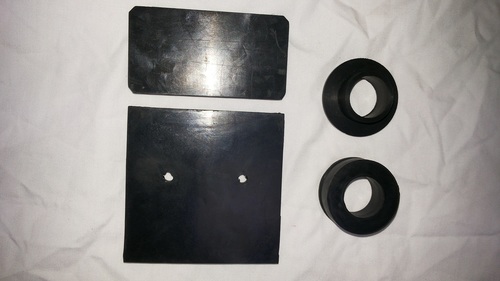
Tell us about your requirement

Price:
Quantity
Select Unit
- 50
- 100
- 200
- 250
- 500
- 1000+
Additional detail
Mobile number
Email

More Products in Insulators Category
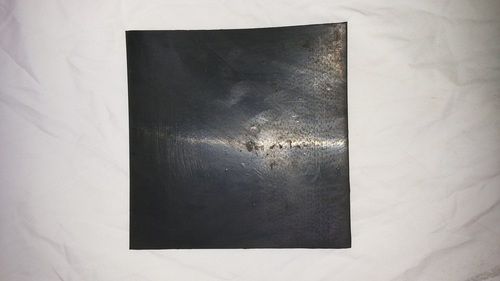
Insulation Rubber Sheets
Minimum Order Quantity : 500 Pieces
Usage & Applications : Electrical insulation, transformer and switchboard linings, antivibration pads, gasket manufacturing, industrial flooring.
Components : Single sheet, no embedded components
Surface Finish : Smooth, antislip on request
Water Absorption : <1% (low water absorption)
Feature : High dielectric strength, nonconductive, flexible
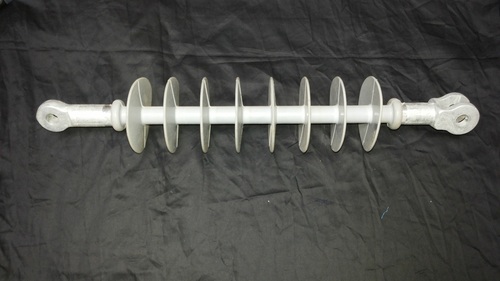
Voltage Insulators
Minimum Order Quantity : 1000 Pieces
Usage & Applications : Electrical power transmission and distribution, insulating high voltage conductors
Components : Insulating body, metal fittings
Surface Finish : Glazed / Smooth
Water Absorption : Low, <0.5%
Feature : High dielectric strength, weather and UV resistant
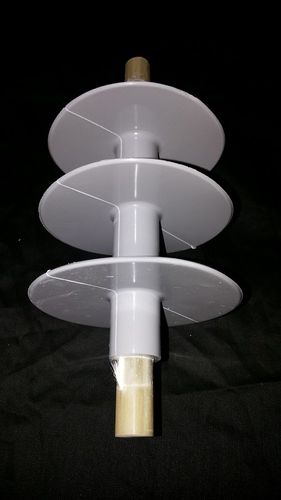
Rubber insulation
Minimum Order Quantity : 500 Pieces
Usage & Applications : Insulation for industrial or electrical applications
Components : Rubber insulation with solid structural base
Surface Finish : Smooth
Water Absorption : Low
Feature : Durable and insulating material

 Send Inquiry
Our Products


Plot No.6-B, Sompura 1st Stage, IDA, Pemmanahalli(V), Sompura Hobli, Nelamangala (T),Bengaluru - 562111, Karnataka, India

Mr. Mangesh Dhavan
(Proprietor)
Mobile :08045815539
 Send Inquiry
 Send SMS
Developed and Managed by Infocom Network Private Limited.


